Showing posts with label Flora Friday. Show all posts

Vine's Flora Friday: Baobab Tree

The boabab tree is probably the most interesting and intriguing species of tree in the world. It is by far my favorite tree.

There are nine different species of baobab, which are native to Madagascar, Africa, Australia and the Arabian Peninsula.

But their shape is by far their most interesting feature. Usually, their trunk is a tall, smooth cylinder, reaching about 100 feet. The branches can only be found at the top, where they grow out somewhat parallel to the ground. Sometimes baobab trunks are hollow, and the crescent shaped branches act like chutes catching precious rain which runs down the branches and is stored in the hollow trunks. Natives of Africa use this to their advantage so they can have a steady supply of water, up to 32,000 gallons, during dry periods.

In addition to these remarkable features, the fruit produced by baobab trees is not only edible, but tasty! It is reported to taste like grapefruit, pear and vanilla all in one. African natives use this fruit as a food source, which provides carbohydrates, vitamin C and many other vitamins. However, the fruit is not the only edible part. The leaves can be prepared like spinach, young tree sprouts can be eaten like asparagus, and the seed can somewhat replace coffee beans.

Someday, I'd really like to try some baobab fruit, but until then, keep checking this cool blog!


Vine's Flora Friday: Jewelweed

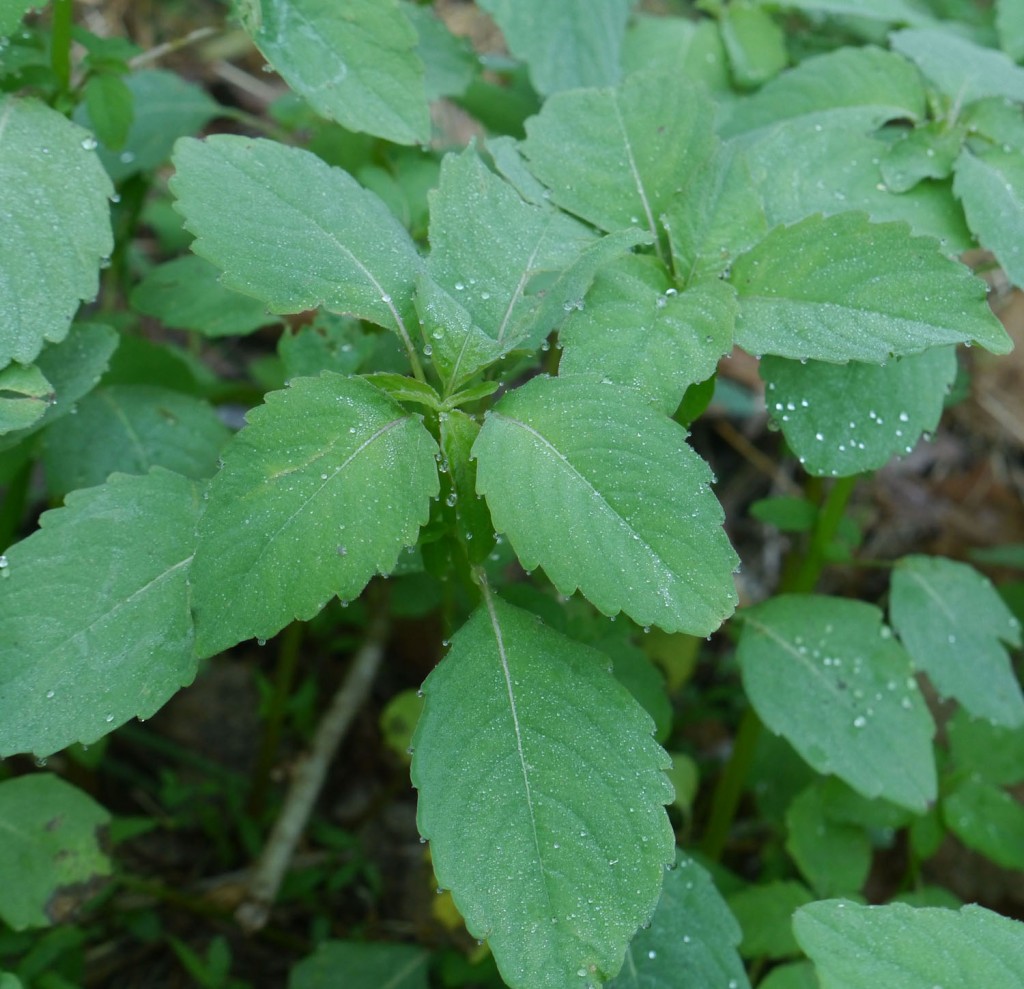
Jewelweed is a common plant you might find growing in your backyard if you live in the USA and have a shady wooded area. Many gardeners are distressed when they see this plant growing next to or in their garden and pull it up to make room for their veggies, but growing jewelweed does have its benefits.

If you ever get pricked by a nettle or rub up against poison ivy, you can turn to jewelweed for a mild antidote. A botanist by the name of Mike Balick blends up jewelweed, freezes the product into ice cubes, and rubs the ice cubes on rashes or irritations. Although it can't completely alleviate poison ivy symptoms, jewelweed is an effective antidote for the itchy rashes.
The juice from the leaves are an antidote to poison ivy

The touch-me-not is a name used by some to describe our helpful friend. This name comes from the plant's seed-pods, which, when ripe, explode and scatter seeds everywhere at the slightest disturbance.


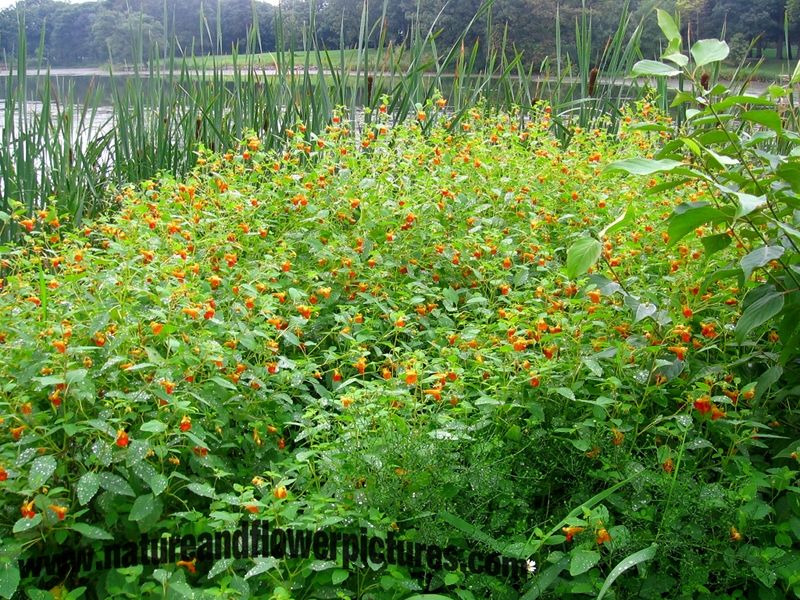
Jewelweed's beautiful bloom
A mighty fine crop o' touch-me-nots


So next time you see a touch-me-not taking up space in your garden, remember that this plant just might save you from a lot of itching!

Vine's Flora Friday: Dandelion


The dandelion, although seen regularly and discarded as commonplace, has some very interesting God-given features. Its name comes from the French "dent de lion", or lion's tooth for the golden petals that resemble teeth.

For many years, needy families have gathered its leaves to create a nutritious salad. Their leaves are also cooked with other greens for an extra food supply. In past centuries it was used for medicinal purposes. It is a mild laxative. Every part of the weed can be utilized; it's leaves, root and flower can be used for eating, medicine and dying.

In the 1800s, people would rather have a healthy lawn of dandelions and other weeds instead of plain grass, in dire contrast to our modern practices. Thinkers often noted that the plant could represent all three heavenly bodies; the flower was our sun, the silver puff-ball was the moon, and the dispersing seeds were the stars.

Dandelions also have one of the longest flowering seasons of any plant. So next time when you go to weed your lawn, remember the tasty, helpful dandelion.

---
Don't know who Vine is? Wondering why he's posting on this blog? Check him and his friend out here.

Vine's Flora Friday: Wild Ginger


Wild ginger is a plant not often known, but one you might find in your backyard. It grows in shady wooded areas in Eastern North America, and is cultivated in many other localities.
http://www.fs.fed.us/wildflowers/plant-of-the-week/images/wildginger/asarum_caudatum_mac_lg.jpg
Wild ginger grows close to the ground with glossy, heart shaped leaves. It grows low to the earth because it is pollinated by ants. At various times of the year, the plant bears a single deep purple flower with three lobes.


Vine's Flora Friday: The Quaking Aspen


The Quaking Aspen, also known as the Trembling Aspen, is a glorious deciduous tree that creates beautiful scenic views when they cover the landscape with their orange leaves.

This tree gets its renowned name from its leaves higher tendency to "quake" and flutter. The reason for this is the stems of the leaves. These stems are flat, while other trees' stems are usually round. So at the slightest breeze, the leaves tremble and flutter with more vigor than other plants.

Quaking Aspens have two ways to reproduce. One is the minuscule seeds housed in a fluffy substance inside a "shell". Ironically, Trembling Aspens rarely reproduce from these seeds. They have a much more interesting, strange way of creating more of them selves. They reproduce by sending out roots that grow up, break the surface and culminate into a new tree. The new tree is an exact clone of the original tree, and share the same root system. Thus they may be considered to be the same organism. This reproduction system leads them to develop large colonies, and these colonies are said to be the same creature*. One such organism, dubbed "Pando**", holds the record for the largest organism on the planet, weighing in at 13 million pounds and covering 1.6 acres.


Quaking Aspens range all the way up to parts of Alaska and Northern Canada. The only hindering factor is the aspens' inability to endure permafrost.

This fascinating tree is an amazing creation from the hand of the Ancient One, a plant to be respected and enjoyed. 

*See http://discovermagazine.com/1993/oct/thetremblinggian285#.UjtCMLyYNFw
** Latin for "I spread"

Vine's Flora Friday: Carnivorous Bromeliads

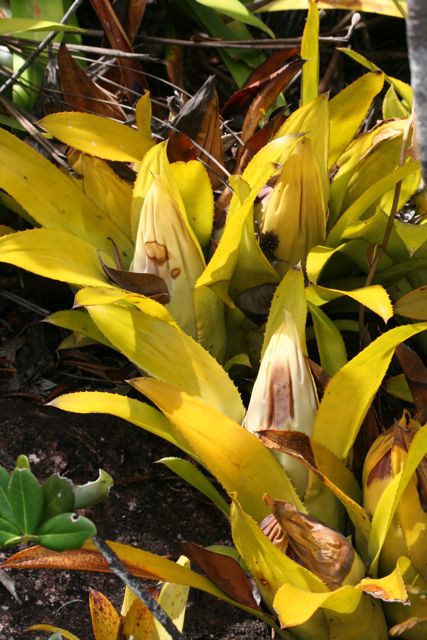
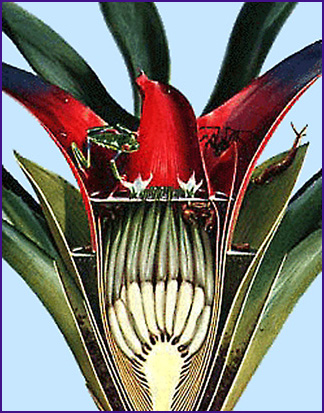
Most think of a tropical plant with long cupped leaves growing from the center when "bromeliad" comes to mind. Perhaps with a gentle pool of water in the center which a motherly frog converted into a nursery for her young. Most do not think of a treacherous, flesh eating creature lurking in the depths of the jungle.

Carnivorous bromeliads are surprisingly rare in the bromeliad family, considering the most bromeliads automatically trap insects in the pools of water contained by their cupped leaves.  Many scientists find this an oddity that carnivorous bromeliads are in the minority, considering that they're set up to evolve a taste for insects. But the Bible says in Genesis that He created the world in six days, and that He has made every living thing the way He wants.

These bromeliads, spanning several genus's, capture their prey using a simple method "borrowed" from pitcher plants, another fascinating carnivorous plant. They simply wait until a juicy bug, perhaps mistaking the plant's leaf configuration for a nectar-filled flower, stumbles into the pool of water and digestive juices in the center of the plant. Of course, this occurs normally with most other bromeliads. Simple acidic chemicals and slippery walls differentiate between the types of bromeliads and make it easier for them to catch arthropods. Not only do the walls have a waxy, slippery coating, but a layer of white, UV-reflective power. As insects' eyes can absorb UV light waves, the power causes the plant to stand out like a neon light to any unsuspecting insects. The presence of water, previously deceased insect, and sweet, sticky secretions also add to the attractive attributes of the botanical predator.

These strange bromeliads demonstrate the creative particularity of God in a fascinating way.

Vine's Flora Friday: The Bird of Paradise

The Bird of Paradise, a tropical flower native to Southern Africa, gets its name from its heavenly bloom which resembles a bird of paradise in flight. It is truly a gorgeous bloom which seems to symbolize heaven itself.

The plant itself usually grows to about 4 feet tall and bears 1 or more flowers. The leaves resemble banana leaves, and the flower contains a shocking, and delicious, palette of colors. It contains a royal blue, sunny yellow, lime green on the stem, and hints of pinkish red.

Birds of Paradise Flowers are usually pollinated by sunbirds, who, while searching for sticky nectar that oozes from the bloom, are dusted with pollen. When the bird flies to another meal, the pollen is transferred to another flower and the result is a leathery, oily fruit. But beware! The seeds are toxic to humans and dogs.

These are one of the Curious Robot's favorite flowers, along with Walking Iris' and Pink Lady Slippers.

Vine's Flora Friday: Poison Ivy


Poison ivy is found in Europe, North America and some parts of Asia. Its infamy comes from the oils in its leaves which cause a miserable and itchy rash on primates and humans that can last for weeks.
This pesky botanical creation produces small white, green or yellow flowers, often hidden in the shadows of the leaves. After being pollinated, the flowers turn into seeds which looks like a berry and are poisonous to humans. The berry-seeds are spread by avians or simply drop to the ground to continue reproduction. 


Poison ivy in the summer

The small plant can manifest as a crawling vine which wraps itself around trees, or small under brush plants growing low to the ground. Poison ivy is easily recognized by its 3 leaves which sometimes have a pink or red center.


Although poison ivy has a reputation for being bad for our skin (and sometimes sanity when it comes to scratching the rashes madly), it ounce cured a mans herpes sores after its discovery by the Eastern World sometime before 1640. The man had been plagued by these rashes for six years and when the sores came in contact with poison ivy, he also got rashes from the plant. But when the poison ivy rashes cleared up, so did the herpes sores. Doctors and scientists continued to develop the vine and their research led to treatments for rheumatism and some types of paralysis.

Poison ivy is a vine with a reputation for causing terrible rashes, but has also been used to treat herpes, paralysis, and rheumatism. Next time you're avoiding this hazardous plant, remember its important properties. 

Vine's Flora Friday: The Pink Lady Slipper

The Pink Lady Slipper is a wild orchid native to the eastern half of the U.S. It is highly endangered because of its fragile and complicated reproduction cycle.

Two long leaves growing out of the ground form the base of the plant with a singular stalk shooting up from between them. The foot long stalk bears one magenta or light pink flower, which can sometimes be yellow.  Rarely the entire flower is pure white, and those who have seen a White Lady Slipper are very honored.
Map of the United States showing states. States are colored green where pink ladies slipper may be found.

Lady Slippers require pollination to create seeds. The wild orchid tricks the bee into wriggling through the front slit of its flower with its luxurious scent and bright colors. The arthropod finds no reward and escapes the pouch, in the process vacating the premises through a different exit and collecting the plants pollen.

After being produced and dispersed, the seeds must be buried where a special fungi grows in the moist earth. This fungi opens the seed and provides it with nutrients, because Lady Slipper seeds do not have their own food supply like other seeds to help them grow. From the time the seed is buried to when it sprouts is much longer than other flowers. After the precious plant reaches maturity, it can live for up to 20 years while in turn providing the helpful fungi with nutrients. This symbiotic relationship is one of the reasons why Lady Slippers are so rare. The fungi which aids the orchid is not found everywhere in the soil.

My family just discovered a whole patch of Lady Slippers sprouting up this Spring at our new house! We counted at least 12! I am thrilled to know that this discovery means that Lady Slippers are at least 12 more strong in their battle for survival.